DEFINITION

Velocity–Understanding Gap

Also known as: velocity understanding gap

The velocity–understanding gap is the distance between how fast a team ships code and how much of that code its engineers actually understand.

The velocity–understanding gap names a specific hazard of AI-assisted development: output can accelerate far faster than comprehension. A team may double its shipping rate while the share of merged code any human genuinely understands quietly falls.
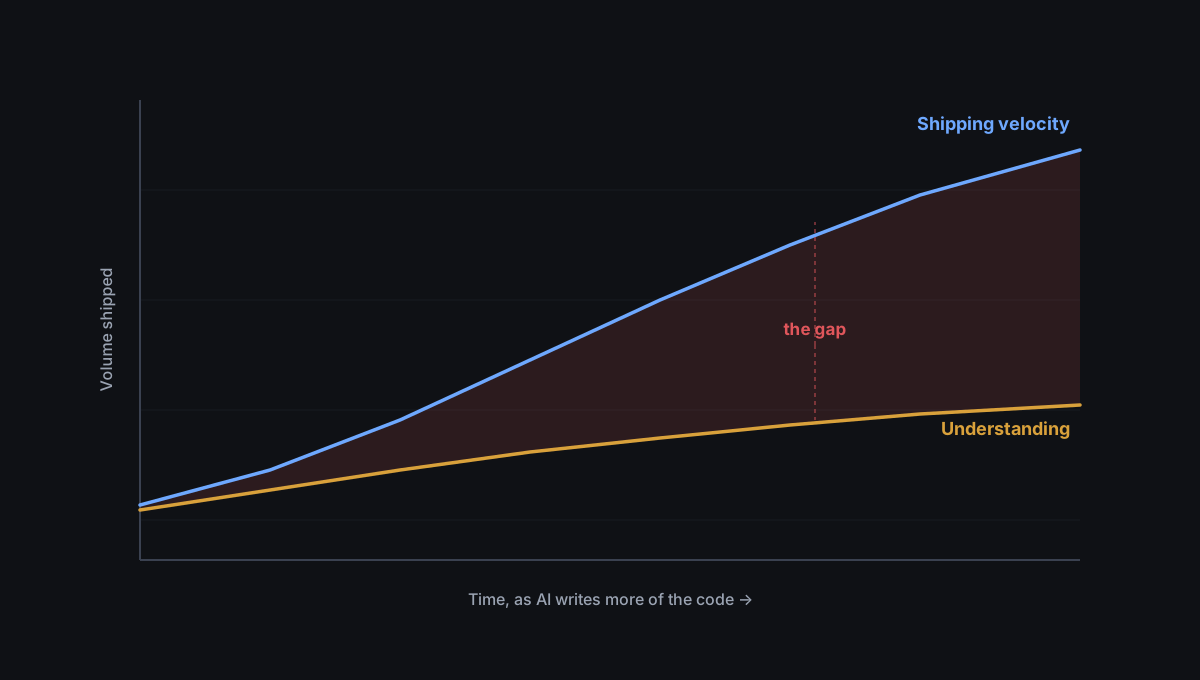
A line chart over time: shipping velocity climbs steeply while genuine understanding rises slowly and flattens, opening a widening shaded gap between them.
As AI writes more of the code, shipping velocity and genuine understanding diverge. The widening band is the gap.

The gap is invisible on a velocity dashboard — story points, PR counts, and deploy frequency all look healthy. It surfaces later, as slow incident response, brittle refactors, security findings in code nobody reviewed deeply, and onboarding that stalls because the "how" lives only in a model's context window, not the team's heads.

Making the gap visible is the first step to managing it: measure comprehension alongside throughput, and invest in closing the distance where the code is most critical. Cartara's Velocity–Understanding Gap calculator gives teams a first rough read.

Frequently asked questions

Why doesn't a velocity dashboard show the velocity–understanding gap?
Velocity dashboards measure output — story points, PR counts, deploy frequency — all of which look healthy while comprehension quietly falls. The gap is invisible there by construction; it surfaces later as slow incident response, brittle refactors, and stalled onboarding.
How do you close the velocity–understanding gap?
Not by slowing down, but by measuring comprehension alongside throughput and investing where the code is most critical: comprehension checks on AI-assisted changes, evidence-linked explanations, and code review treated as an understanding gate rather than a rubber stamp.
Is the velocity–understanding gap always a problem?
A gap on throwaway prototypes or low-stakes scripts is fine — speed is the point there. It becomes a liability when it opens on production systems that must be maintained, secured, and reasoned about. The aim is to manage the gap where it matters, not to eliminate it everywhere.

See also

Related terms

Engineering IntelligenceTechnical DebtCode ComprehensionUnderstanding Debt

Turn shipping into understanding

Cartara measures what your team actually learns from every AI coding session.

Join the waitlist